
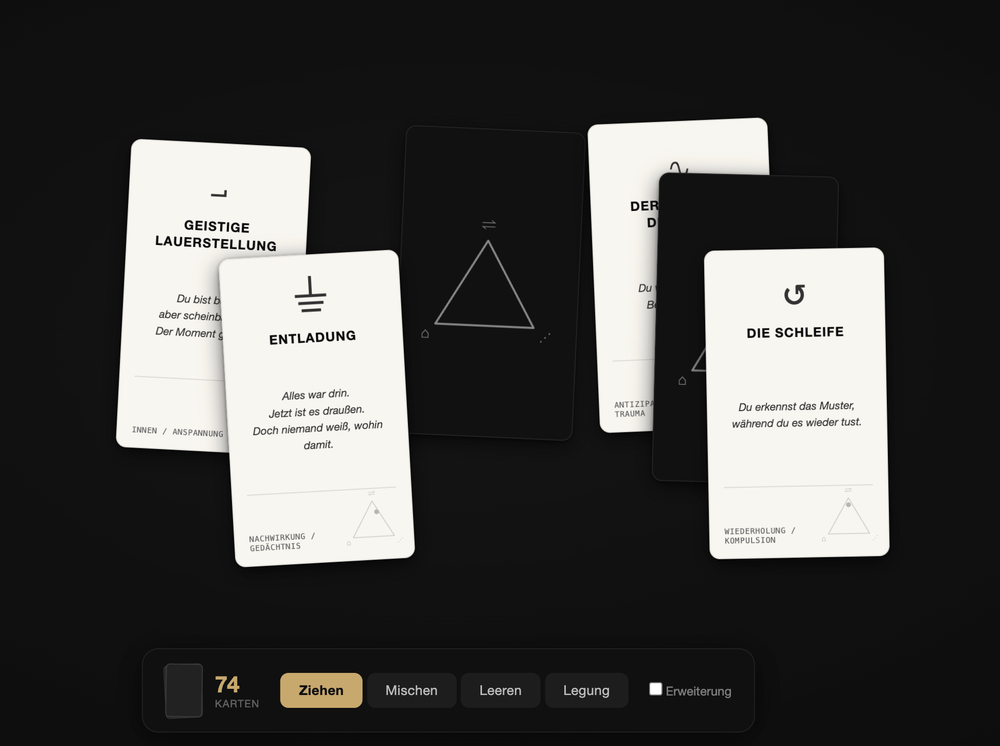
Schwellenkarten Zustände. Muster. Übergänge. Jede Karte beschreibt eine Schwelle — einen psychologischen Ort, den du kennst, aber selten benennst. Die Karten lassen sich entlang von Achsen lesen: nicht als Antwort, sondern als Landkarte.
mind
In 1770, a human hid inside a chess machine and defeated Napoleon. In 2026, 360,000 people signed up to work for AI agents. The structure hasn't changed. It has scaled. On authorship, invisible labor, and why creativity is not generation but selection.
mind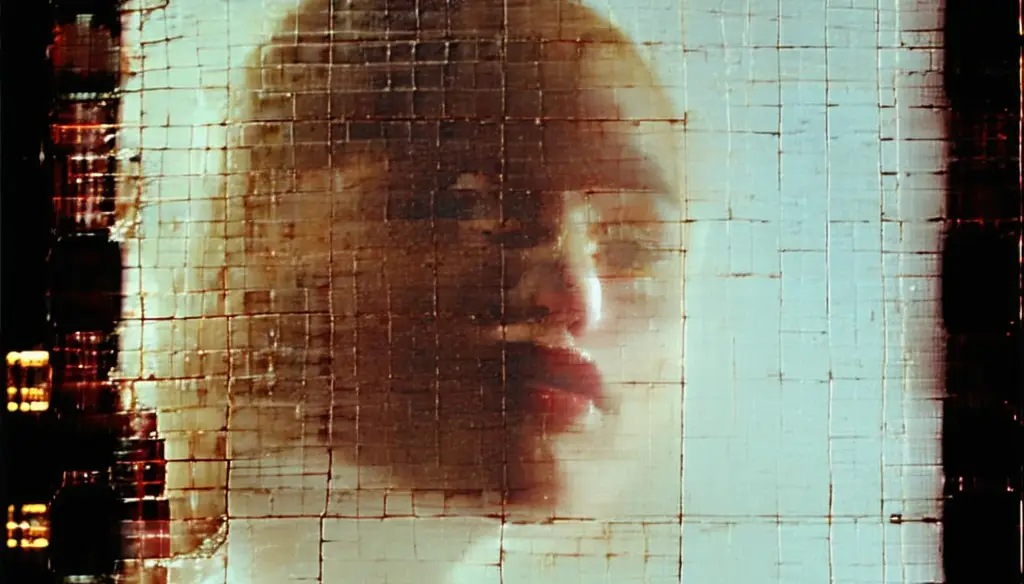
Your face is not your property. It is a pattern — and patterns do not behave like objects. On likeness rights, trust-replacement technologies, and why the system built to protect against betrayal became the betrayal.
mind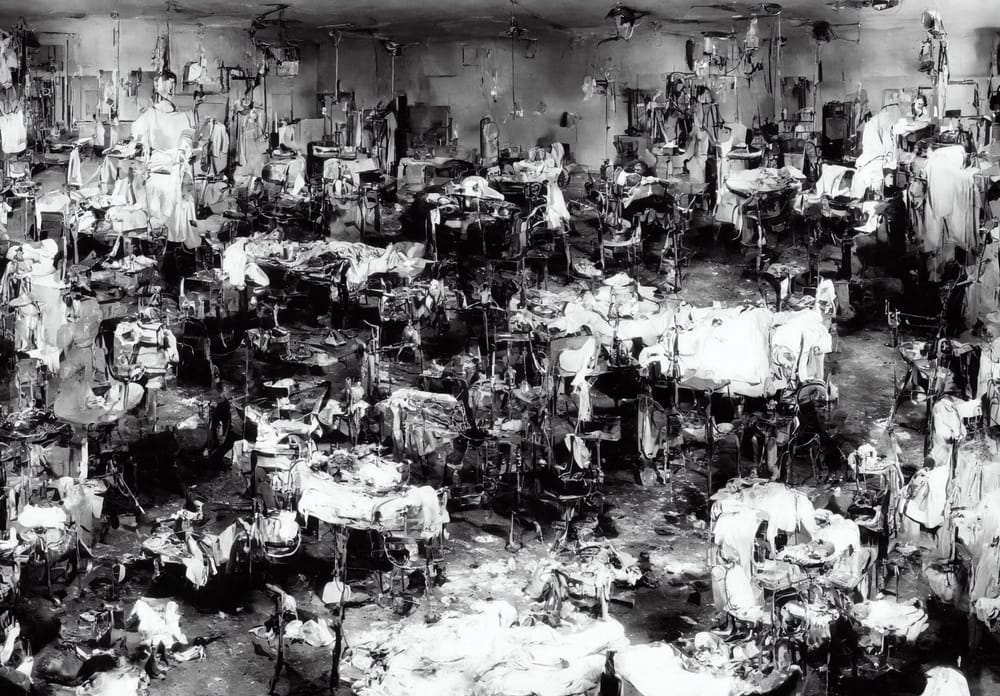
Every funding proposal asks the artist to know the answer before the work has asked its own questions. On committee taste as internal furniture, the grammar of permission, and why the format is the filter.
mind

Drawing from yogic psychology, mirror neurons, and interaffectivity, this post explores Chidakasha as more than a private experience. Through a playful moment with my children, I discovered how sensorimotor imagery can become a shared field—visible, felt, and real.
mind
Erotic longing is not a failure of discipline — it's a whisper from the sacred. But if we feed only the shadow of it, we might never taste its fruit.
mind
The hidden cost of coherence. What happens when our identity becomes a closed loop? This article explores the architecture of internal defense, the metabolic cost of change, and the silent symptoms of narrative rigidity. A meditation on breath, language, and the refusal to collapse.
mind
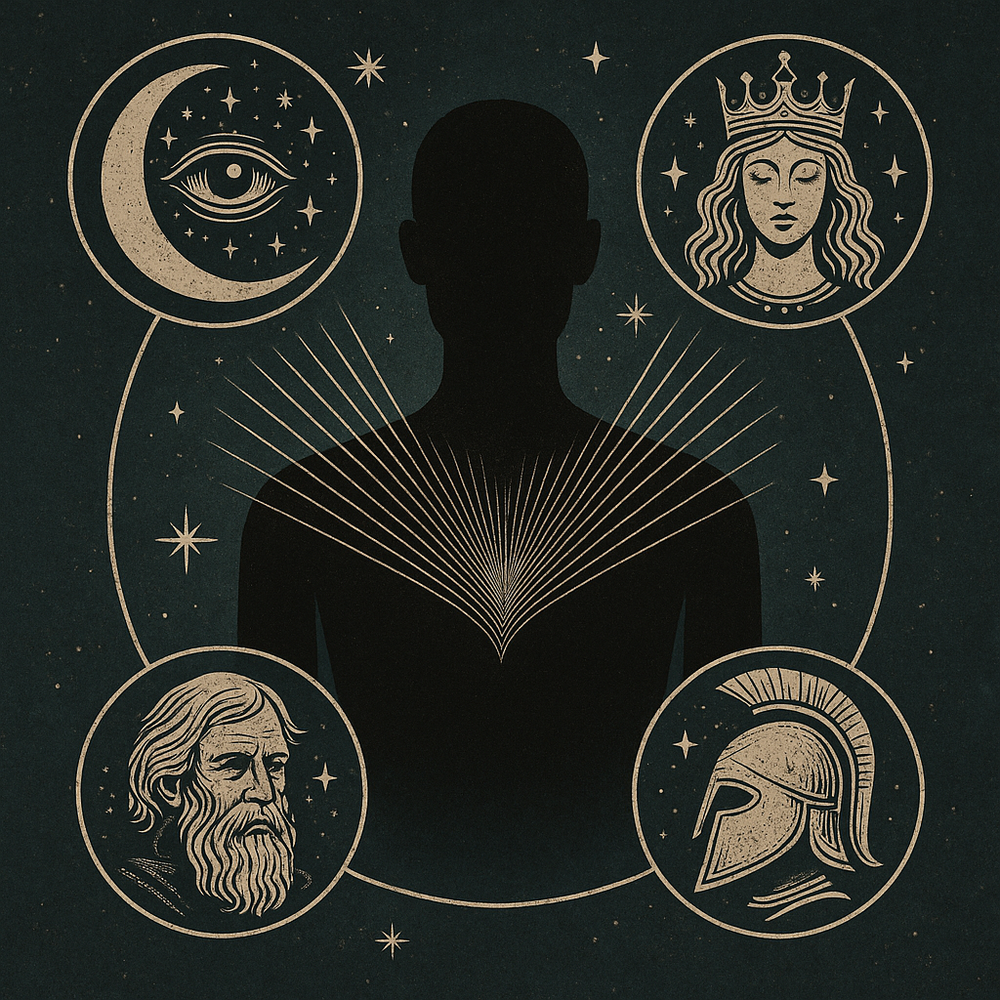
The mind is not singular. It never was. On parts work, pattern interruption, and why the voice that speaks loudest is not the one that knows most. A framework from IFS, hypnosystemic practice, and the archetype as gravitational field.
mind