 scopal affairs
APTOS Retinopathy Detection
A Kaggle experiment classifying retinal images into five grades of diabetic retinopathy. DenseNet and mixup handle a dataset with uneven image quality; quadratic weighted kappa measures agreement with the labels.
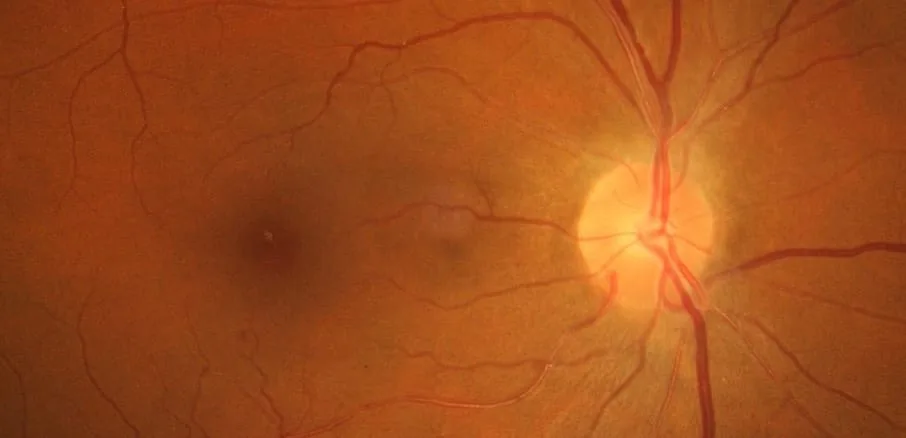
Entry in the Kaggle code competition APTOS 2019 Blindness Detection of the Asia Pacific Tele-Ophthalmology Society. The task: grade retinal fundus images by the severity of diabetic retinopathy (0 no retinopathy, 1 mild, 2 moderate, 3 severe, 4 proliferative) to support early detection and prevent vision loss.
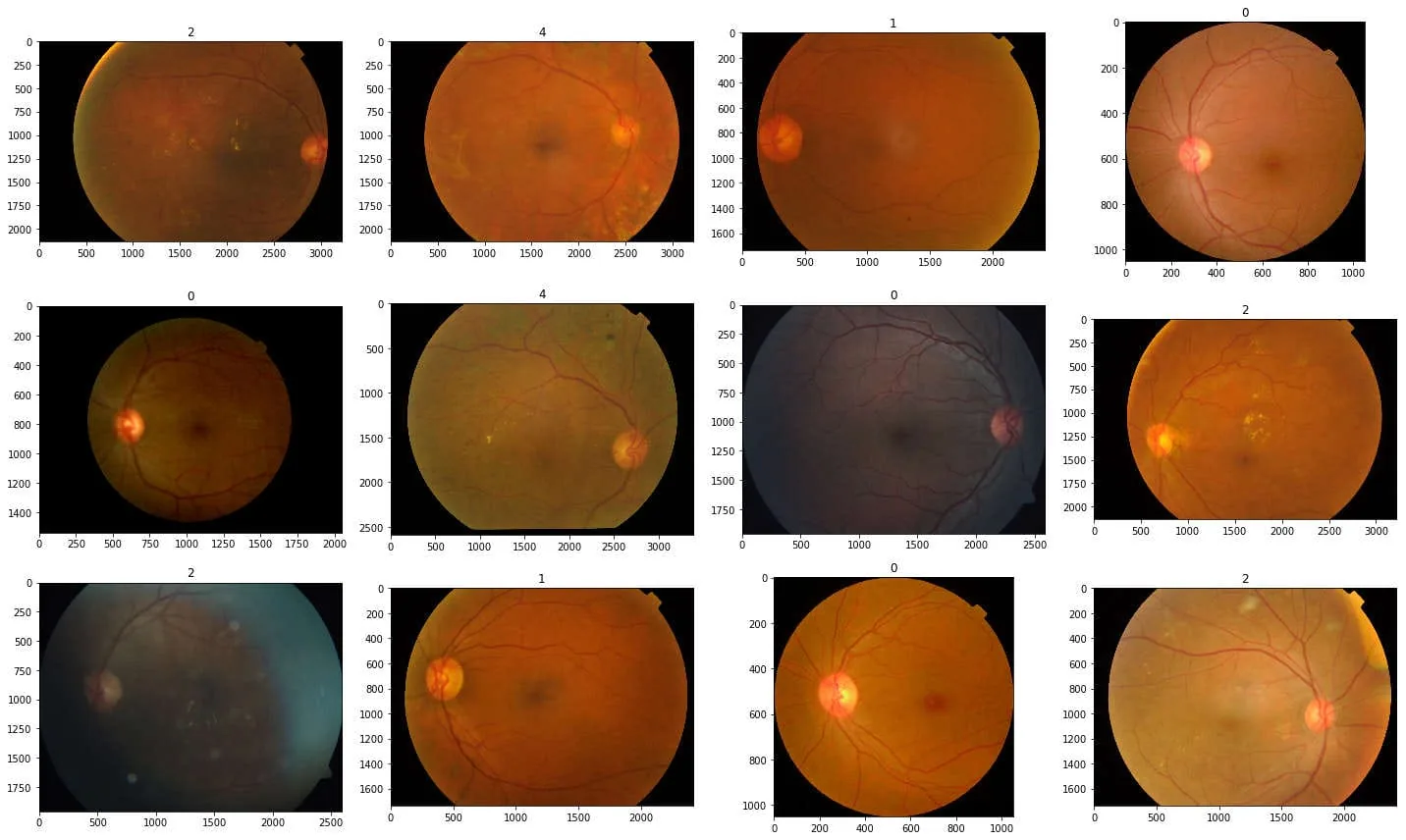
Training images with retina findings.
Data
The images come from several clinics, were taken with different cameras over a long period and contain artifacts, blur, and under- or overexposure. The labels are noisy as well.
Approach
- Model: DenseNet-121 with pre-trained weights; first only the last layers are trained, then all layers.
- Regularization: mixup (Zhang et al.), which trains on convex combinations of pairs of images and labels, plus image augmentation with imgaug.
- Metric: quadratic weighted kappa (QWK), the agreement between the human rating and the prediction, from 0 for chance agreement to 1 for complete agreement. It is evaluated after every epoch, and the best checkpoint is kept.
- Prediction: average over four flipped versions of each image.
- Setup: Keras, GPU, based on the Kaggle Docker image. Kernel
Result
| Leaderboard rank | Score (QWK) |
|---|---|
| 1089 | 0.903 |
Kernel run: private score 0.872, public score 0.721; run time 23,810 seconds on GPU.